PALOMINO
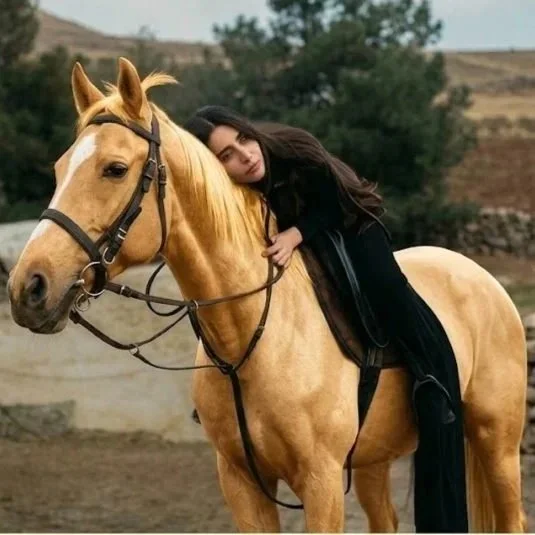
Photo by Alireza Heidarpour
By Sterling M. Hawkins, MSW, LCSW-C, LICSW
When I was young, around the age of eleven, I spent a couple of summers with my aunt and uncle at their home about three miles from where my mother and I lived. My mother would drop me off early in the morning on her way to work and pick me up in the evening on her way home.
My uncle was a retired tool-and-die worker who held a part-time job looking after a small farm for an elderly woman who raised chickens, a few ducks, and a young jet-black pony named Pinto (painted pony) with a dapple of pure white on his forehead and muzzle. And an old Quarter horse named Prince, who sported a beautiful chestnut coat, with a white diamond scepter on his forehead, a light rust mane and tail.
In recent months, as I retraced this memory, I began to reflect on what I loved about these two animals. Each had its own distinct temperament. Pinto was young, energetic, and brash. easily pacified with a treat of fresh carrots or a few sugar cubes that I squirreled away in my pants pocket and would bring some mornings when I arrived with my uncle.
Prince was content observing me from afar and would only come over to me when first let out of the stables, but never after he was in the paddock. Pinto, on the other hand, would only need to see me. Pinto would come running over as I stood on one of the fence rails, reaching over the top rail to scratch his mane or feed him a treat.
Prince, despite being an older horse and no longer being ridden, had a certain charm. He wasn’t easily startled and was gentle when approached. True to his name, he was aloof, yet stately, and concerned himself with a good shade tree in the summer, his water trough, salt block, and feed. Prince used to be a racehorse. He was beautiful, and I admired his build and gait as he strode in the field. But what was Prince really? Who were his parents? What genetic origins contributed to his appearance and his behavioral traits?
The word palomino has Spanish roots (paloma), meaning young dove or pigeon. The name poetically compared the soft, light contrast of the horse’s coloring to a dove. The Palomino horse refers to a specific color type and not a distinct breed. Spanish conquistadors brought the light-colored horses to North America in the 16th century. The golden horses multiplied and became prized by cowboys and settlers in the American Southwest. In the 1940s, the Palomino Horse Breeders of America was formed to preserve and standardize the striking gold color. (New Palomino Horse of the Year Award Unveiled, 2024)
As I reflect on the cultural origins of this majestic creature, I can’t help but think about my own ethnic origins and the ethnicities of other people different from my own. I see the tapestry and the mosaic of people groups with distinct origins from all over the globe. I also see the challenges faced by successive generations in defining what is unique and pertinent to their culture without sacrificing it by abandoning traits that form identity. Sadly, the lines of Equine ancestry are more preserved than my African-American roots. There are many reasons for this. For one, in America, unlike horses, people are not subjugated or subordinate in how they socialize or reproduce. The only exception to this would have been enslavement. And even during slavery, the goal of most white slave owners was to destroy or dilute whatever sense of identity Africans possessed, thus creating a void within their cultural identity. To help me think through the relevance of this topic, I turn to an article titled “How does Culture Influence Identity?”
The article examines how culture influences and shapes our identities, sense of self, relationships, and our personal development. What I found helpful were answers to the challenge each generation faces in defining itself culturally and preserving what is essential to its identity. The term that caught my attention was Cultural Homogenization, the process by which unique local cultures, behaviors, and traditions become more similar or uniform. I am using it to describe how the dominance of Western cultural influences has eroded traditional cultural practices and led to the adoption of more global cultural norms. Another related but distinct term is the outcome of cultural homogenization—“Cultural Hybridization,” which, in humans, refers to the process of combining different varieties, species, or populations of organisms to produce offspring called hybrids. That is the blending and merging of different cultural traits and influences, resulting in new cultural forms and expressions.
I find myself resisting hybridization. Perhaps because hybridization represents something new, neither completely traditional nor postmodern. Perhaps because it represents something or someone that is more difficult to discern and not easily defined. Hybridization, carried to its fullest extent, leads to globalization, another term that, for me, equates with dissociation and discomfort.
Globalization, when applied to humanity as a whole, does not create distinct, definable memories of what makes certain groups of people unique and identifiable. I believe the net result of globalization is negative because it adversely impacts the social and mental well-being of various groups. Let me unpack this using some of the points given in the article.
The term hybridization implies a surrendering of sorts. That is, to become something new, I must downgrade or devalue something in lieu of another, something or someone. The idea that both the old and the new could hold equal value, while valid, is untenable when it comes to cultural identity, because the mind often seeks balance. Therefore, one is constantly asking questions about the quality of the new cultural form or expression that has replaced distinct entities that preceded it. This effort to create a balanced form of identity is most apparent when Individual Identity and Collective Identity are compared side by side, revealing the tension of arriving at a comfortable middle ground.
Our identity is a complex interplay between our individuality and our affiliation with various collective groups. Individual identity refers to the unique characteristics, traits, and experiences that make each person distinct. It is shaped by our personal values, beliefs, goals, and life experiences. However, the expression and development of individual identity can be influenced by cultural factors. (How Does Culture Influence Identity, 2024)
The division we witness is experienced individually and collectively. Culture influences individual identity by providing the framework that allows each of us to navigate our roles, relationships, and aspirations. Culture shapes the values and expectations that we internalize by influencing our choices, behaviors, and sense of self. (How Does Culture Influence Identity, 2024)
Our collective identity, on the other hand, is formed through shared cultural experiences, values, traditions, and a common sense of history or heritage. The expression of collective identity occurs whenever we claim a national identity, for example, our citizenship in a country of birth, or ethnic and religious identity. Membership in specific social or interest groups is also an example of collective identity. (How Does Culture Influence Identity, 2024)
Navigating the balance between individual and collective identities can be a complex task. Individuals may face conflicting expectations and pressures from both their personal aspirations and their cultural affiliations. Striking a balance between the two is crucial for a healthy sense of self and a harmonious integration within society. (How Does Culture Influence Identity, 2024)
The challenge that we face as individuals is that parts of us are constantly being challenged to become something different or someone new. While the prospect of becoming new or different can be inspiring, I believe it is important to ask: From where does this challenge originate, and what expectations inspire us to become something or someone we are not already?
I said earlier that globalization does not create distinct, definable memories of what makes certain groups of people unique and identifiable. And that the net result of globalization is negative because it adversely impacts the social and mental well-being of various groups.
Most of my clinical work has been in the area of aging. Therefore, I will use aging as a reference to underscore my point. Now that I am part of the cohort I work with, I see the challenge of striking a balance between embracing new forms of cultural and ethnic expression and preserving traditions and customs that are gradually fading. I wrote about this in a previous blog post titled When Craft Becomes Art, Jan 2026. In this essay, I argue that timeless things that define our inward character, not just our outward appearance, should be preserved because they embody a particular soul or ethos in how we should live as people, which defines how we seek to be understood and acknowledged. I allude to the fact that history provides both a pleasant and painful record for reflection and application. Each generation is tasked with asking the questions: What have they learned well? What have they accomplished that can be called good? And what are the positive influences that should be encouraged and preserved for future generations to both know and continue practicing?
Older adults feel this tension acutely with new technologies. I think about how, as a writer, using AI and related technologies has made some of my writing and research easier, as I compare and contrast different authors and topics that interest me. On the other hand, the volume of material generated by new school technologies, even with a narrow search window, can feel daunting. While old-school methods- physical catalogs, books, paper surveys, and hand statistics- are more time-consuming and labor-intensive, they provide many older adults with more control and help establish baseline principles that can be applied in ways that transcend technological advances. Particularly in communities where these technologies are outdated or absent.
New school data analytics, automated software, and machine learning models that are quick and easy may require you to add to your learning things you may not need to know. To remain current and competitive, you move toward cultural hybridization, which forces you to learn and incorporate new knowledge. I experience this form of tension whenever there’s a Microsoft upgrade. When I have learned to navigate and become comfortable with my current edition, another edition is forced upon me, which often requires me to embrace it or get left behind. I also own a MacBook, which simplifies certain operations because I use it only for certain types of work and the PC for others. I’m fortunate in this regard. I am not against the evolution of technology. I embrace innovation and industry. However, the rate of development outpaces my ability to learn certain things well and to gain mastery of the skills that strain my competence.
These are not moral choices that I am making. And I don’t believe I will be any less knowledgeable by rejecting certain technologies. The question most often raised is: will I remain relevant and be accepted, listened to, or taken seriously by the collective culture if I reject hybridization? My identity, if I am not careful, can be inextricably tied to my acceptance or rejection of something that may not significantly change my beliefs, but may radically change what I can access or successfully incorporate into my present life.
New tools in the area of education and information management will continue to improve and be introduced to and utilized by the next generation that learns to use them. However, with each change, I must decide whether it is worth adopting or simply saying, "This is not for me." I read more than I watch television. So some features on my wireless remote are foreign to me. Whenever I upgrade or purchase new digital equipment or software, I call one of my two sons to walk me through the process. One is an architect and the other an IT engineer. So they eat this stuff for lunch and can do in minutes what may take me hours.
Some artisans and craftsmen and women have chosen to preserve the best of their cultural and racial heritage. I am always drawn to historical and folklore societies for this reason. They are repositories of the cultural and moral practices that highlight aspects of art, science, and religious values that serve people and their communities well. They ensure that specific bodies of knowledge and practices will continue to exist and be known for generations to come.
The Palomino Horse Breeders of America (PHBA) was formed to register, record, and promote golden-coated Palomino horses. It is a non-profit organization that maintains pedigree records that ensure that the color markings and lineage are preserved.
The old racehorse Prince, by the time I came to know him as a young child, had completed his time on the track. Whatever medals or races he had won were known only to his owners and those who profited from his contributions to the sport. However, through the intentional efforts of horse breeders who recognized that his equine heritage, markings, and temperament should be preserved, I benefited from spending time and learning about this amazing animal.
The Palomino Horse Breeders of America’s efforts to preserve the unique qualities and traits of equines is a good example of how intentional efforts by groups and communities that share similar backgrounds and identities can preserve aspects of their culture that serve future generations.
Rituals and practices in communities that prioritize cultural collectivism aimed at preserving a sense of connectedness, social support, belonging, and purpose will, in short, enhance the overall well-being and lives of their inhabitants.
In the end, most want to be remembered for something. Everyone knows something and has something to share that is valuable and worth passing on. The questions that shape outcomes, effectiveness, and legacy, and what they can teach future generations, must always be asked of each individual and every community.
In the words of CS Lewis
“… it’s not the remembered past, it’s the forgotten past that enslaves us.” (De Descriptione Temporum, 1962.)
_________________________________________
References
De descriptione temporum.(1962).https://homepages.uc.edu/~schaefdw/temporum.html
How does culture influence identity. (2024, May 28). Retrieved August 5, 2026, from https://www.talkthirdspace.com/blog/how-does-culture-influence-identity
New Palomino Horse of the Year Award unveiled. (2024). Retrieved August 12, 2026, from https://www.palominoheritage.com/history/formation-of-palomino-horse-breeders-of-america