MADNESS, RACE and INSANITY in a JIM CROW ASYLUM by Antonia Hylton
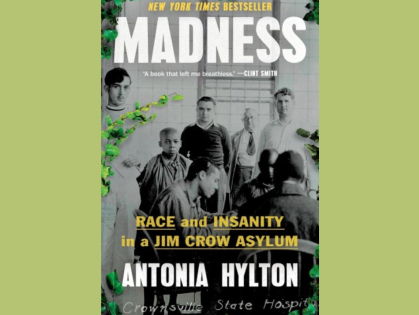
A BOOK SUMMARY: By Sterling M. Hawkins, MSW, LCSW-C, LICSW
Madness is a non-fiction, investigative history of Crownsville Hospital, located in Anne Arundel County, Maryland, one of the last segregated asylums in the U.S. The book chronicles how the institution, staffed by forced patient labor, neglected and abused Black families, while exploring the history of racism in American mental health care. These first-person accounts and archived records of the historic institution are sacred. They represent a period of American history that will remain disgraceful for anyone who incentivized the exploitation of Blacks in the name of rehabilitation.
This account, written by veteran journalist Antonia Hylton, tells the stories of a people and a place that were unknown or long forgotten until now. Crownsville’s remaining patients (approximately 200) were moved as part of a state action to close the hospital because of budget concerns. It covers the period from 1911 to 2004. A period spanning more than ninety years. Each chapter tells a story that has survived as a testament to the lives that were hidden and consumed by a system of institutional and racial oppression. This is an account of psychiatric and mental health treatment that has been hidden for almost a century.
While Maryland never joined the Confederacy, large parts of the state were sympathetic to its cause. (Hylton, 2024, p. 15) By the early 1900s, post-slavery, many Black people were mentally battered and bruised. The need for mental health care was evident. But how do you treat free and formerly enslaved African Americans, and how were white people to understand what plagued them? (Hylton, 2024, p. 24)
Crownsville State Hospital started as a three-building structure built by the patients themselves and grew to become a massive operation with dozens of buildings, sheds, and cottages, a mansion for staff who oversaw the treatment of thousands of Black Americans who were deemed mentally unfit to live in the general population. Patient labor (referred to as Industrial Labor) served as a revenue source and helped make the hospital profitable. (Hylton, 2024, pp. 41-42) In addition to working at the hospital, patients were loaned to local companies and private landowners for cheap labor. Patients were allowed to keep a small part of their earnings; however, most would go toward offsetting their care at the hospital. (Hylton, 2024, p. 41)
The conditions at Crownsville for Black families at the beginning of the twentieth century could only be described as shameful. These conditions, inflicted on patients, presented painful limitations because many patients had no family members able to travel to the remote location of Anne Arundel County to advocate for their release. Black men in particular, suffering from a disability or mental disorder, often ended up warehoused and subjected to indentured servitude. In the wake of Emancipation, many Blacks were forced to work on local farms and in factories.
The underlying message was that Black people should still be owned. This was the prevailing attitude among whites when young Black men were destitute, different, and strange. In the most extreme cases, where white Marylanders felt threatened, lynching was a probable outcome. (Hylton, 2024, p. 64)
Between 1889 and 1930, 3,724 people were lynched. In the South, over four-fifths
were Black. In almost every case, no serious effort was made to identify and punish
lynchers. How could you not go mad? (Hylton, 2024, p. 64)
Ms. Hylton informs readers about her family's history and their experiences in the mental health system. Throughout the book, she used her own journalistic prowess to read, research, and write. She gathered information for over a decade, which began while she was a student at Harvard University. She collected information from hundreds of written and oral testimonies, vetted through the Maryland State Archives and supported by her work as a journalist with NBC News. After obtaining a Letter of Commitment in collaboration with the publisher Legacy Lit and authorization from the state of Maryland, she began the monumental task of excavating a slice of little-known Black history in Maryland from 1911 to 2004. She acknowledges the former employees and patient families who were essential in preserving this rich legacy.
Throughout the first half of the twentieth century, the records paint a clear picture.
The conditions at Crownsville were violent and exploitative. For the first several
decades, racial hierarchy and state-sanctioned segregation ensured the hospital’s
all-white staff dominated their patients and controlled the official narrative of what
was happening. (Hylton, 2024, pp. 69-70)
Organizations like the NAACP, the Crownsville Auxiliary, and other African American community leaders attempted to change this. But their network of volunteers was unable to stem the deeply ingrained biases held by whites who were less committed to humane care. (Hylton, 2024, p. 70) One of the first reports that highlighted the many problems at Crownsville beyond the local community was completed in 1949 by a journalist named Howard Norton, who reported that Crownsville was the only place, public or private, willing to take in Black residents, and had only eight doctors to care for more than 1,800 men, women, and children, who were described as being herded into its buildings. (Hylton, 2024, p. 72)
While overcrowding was not unique to Crownsville, white state institutions were rarely described in such desperate terms. Men and women slept in basement storage rooms and sweltering attics without fire escapes. Children slept two to a bed, feet to head. Children shared space with men who had been labeled as sex offenders. (Hylton, 2024, pp. 72-73)
One of the prevailing beliefs surrounding treatment at the time was the belief that tasks, cleaning, and craftwork could alleviate mental distress. (Hylton, 2024, p. 25) While popular in most mental health institutions, what set Crownsville apart was its dependence on patient labor for community placement and/or deinstitutionalization. Skilled manual labor by the hospital’s patients would serve as an incentive for facility administrators to keep the hospital open.
The hospital had a high turnover rate due to the conditions in which staff were required to work. This was combined with sociological factors, including isolation, abandonment, exploitation, and violence. The hospital was seen more as a place of harm than of healing, contrary to its original intent. One reason Hylton cited for perpetuating the problem was Crownsville’s refusal to hire any Black staff. “This straightforward truth seemed to go over the heads of many of its white neighbors. . . Black Marylanders living in Anne Arundel and nearby counties were desperate for Crownsville and many other state institutions to desegregate. This disconnect on the true cost and consequences of segregation was enough to drive Black residents mad”. (Hylton, 2024, p. 102)
Black employees hired throughout the late 1940s and 1950s became symbols of change and discomfort. While their jobs provided opportunities for upward mobility, they were also on the receiving end of intense resentment and hostility from white colleagues. (Hylton, 2024, p. 113) This resentment was even expressed and felt by Blacks themselves against other Blacks who arrived to fill skilled positions (nurses, psychologists, social workers, and recreational therapists) that had never imagined someone who looked like them would be seen as anything other than a patient. (Hylton, 2024, p. 117)
Hylton takes a brief departure halfway through the book to trace her own ancestry. Her grandmother migrated from Cuba to begin a new life as a student in an all-Black girls’ boarding school in Baltimore, Maryland. Her grandmother struggled to assimilate while caught between her beloved Cuba and her newfound family, the Oblate Sisters of Providence, who ran Saint Frances Academy, where she found sanctuary and spent her formative years. In 1952, her trips home on school breaks ended. That was when Cuba became a communist country. Democratic rule had ended. Rampant privatization and de facto segregation, encompassing death and violence, became the norm. The politics of the times meant that her grandmother, Lucretia Marquetti Mendieta, would remain in the US. She later left Saint Frances Academy to attend college, earning a degree in chemistry that enabled her to become one of the few Black women employed at the prestigious Johns Hopkins University as a lab tech. She went on from there and continued pushing the boundaries by entering an inter-racial marriage, seeking geographic safety away from Jim Crow antagonists, and starting a family. Hylton writes that Havana came to represent heartbreak, illness, and tumult as she describes the effect of Communist rule and a dire economy that wreaked havoc on her family back home. One great-aunt, the sister of Lucretia Marquetti, named Idalia, a young mother, eventually became mentally ill and was institutionalized in a Cuban asylum, where she remained until her death. Her grandmother, Lucretia, was a matriarch who held the family together and survived the forces that sought to separate her from her children. She was praised at the end of her life for her many sacrifices and her legacy of resistance against racism and oppression that made it possible for those who would follow. (Hylton, 2024, pp. 139-145)
In 2022, Ms. Hylton received a warm welcome from a small group of former Crownsville employees. Most were in their eighties and nineties. All were willing and eager to share their accounts during their time at Crownsville. One of several recurrent themes throughout the book is that many of the patients who ended up at Crownsville were unlawfully placed there. Some had no history of mental illness, but simply happened to be Black and victims of racial profiling and white paranoia, in the wrong place at the wrong time. An example of this paranoia is seen in a patient named Mr. Bell. Mr. Bell was visiting Annapolis from London. A jockey by trade who was picked up for loitering after becoming lost. His British accent raised doubts in the minds of white Annapolitans about their safety. He was taken to Crownsville in the late 1940s without any formal charges. He remained there for many years. His story is only one of many Blacks who were literally picked up off the streets in Anne Arundel County and were taken to Crownsville Hospital, where there was little, if any, information documenting the reasons they were brought there. Hylton writes: Many of these patients didn’t talk or had never been asked about their lives before hospitalization. Month after month and year after year of moving between the same dark and dingy buildings took its toll. Like incarcerated people do their time in prison. Their instincts, their ways of thinking, and their movements break down to fit a world with its own rules. As time goes on, it becomes harder and harder to feel like part of the outside world, if they ever find their way back. (Hylton, 2024, pp. 154-155)
Crownsville was better for production and industrial maintenance than for therapy and treatment. During the 1950s, the hospital began hiring black staff. Integration during this time was a delicate balance, integrating Black patients with Black professionals. Physicians, nurses, social workers, and recreational therapists joined together to better engage patients through a shared sense of inhumanity. (Hylton, 2024, p. 157)
Crownsville suffered from many things. Low funding plagued the legacy of systemic racism and segregation in a Jim Crow institution that was slow to die. And white Marylanders preferred to maintain the status quo by refusing to invest in the hospital and staff that could improve its accommodations and therapeutic treatment. (Hylton, 2024, p. 163)
In 1963, Crownsville, like all publicly run facilities, was required to admit patients of all races. Between December 1962 and December 1967, Crownsville’s patient population went from entirely non-white to around 70% Black. This was the beginning of a new era in the hospital’s reputation and acceptance throughout Maryland. (Hylton, 2024, p. 165) By the 1960s, Black aides and nurses were being employed at the hospital as the health care industry rapidly tried to professionalize its practices for treating illness and its origins.
Prior to this shift, after Crownsville failed to meet standards set by the American Psychiatric Association (APA), the APA recommended that Crownsville establish formal residency and training programs and conduct medical research through ties to nearby universities. During this period, the path to humane and ethical treatment began. A period which Hylton describes in stark terms where patients and staff became victims, and where few protections existed. She writes that it wasn’t until 1962 that Crownsville earned accreditation. It had poked, tested, prodded, and hosed down hundreds of its patients, and yet was hardly closer to understanding the origins of mental diseases. (Hylton, 2024, p. 176)
While not unique to Crownsville, the push for research in mental hospitals nationwide created a vacuum in accountability, which resulted in numerous human rights violations being committed and dismal evidence of what treatments were effective and those that were not. Sadly, Black patients and staff suffered the most.
In the years prior to the use of anti-psychotic medication, hydrotherapy, and electric shock treatment, and in extreme cases, lobotomies were performed with little or no ethical guidelines with respect to outcomes and how such treatments would impact the lives of the patients who received them. Black attendants and staff believed their patients had been coerced into various treatments that were not being used as a last resort; “it had become as normal as taking vitamins in the morning” (Hylton, 2024, p. 179)
In her interviews with Black employees who had retired from Crownsville, Hylton describes the stress and trauma experienced by the men and women who worked on its wards. She writes: Black staff were at the bottom of the hospital’s social hierarchy and were not given the opportunity to provide input and make recommendations to administrators. White administrators and clinical staff often took a paternalistic attitude. “What often went unsaid but understood was that Black people should be grateful for the chance to work at Crownsville. Keeping your head down and taking orders was part of the job.” (Hylton, 2024, p. 182)
The environmental conditions as chronicled by former workers created what is known as vicarious trauma. A form of trauma not uncommon among those who “bear witness” and who are exposed to the trauma of others. The irony that such treatments designed to alleviate suffering in the patients who are most vulnerable will fail to produce intractable symptoms when administered by staff with no ill effect is unconscionable and an egregious harm to anyone whose primary pledge is to do no harm.
Hylton gives voice to those staff by name. She shares their stories in detail, highlighting how, despite the conditions in which men and women worked, they found ways to engage with their patients that I believe helped some eventually leave Crownsville and regain some sense of normalcy. In some cases, children were invited into staff homes during a rise in the use of antipsychotic medication and a move toward deinstitutionalizing the chronically mentally ill who were able to be managed as outpatients. (Hylton, 2024, p. 187)
“As integration continued, Crownsville slowly shed the plantation structure. Employees worked hard so that a reputation for therapy and professionalism might solidify in its place.” (Hylton, 2024, p. 187)
The Great Migration (1940-1970) describes a period when five million Blacks relocated from the South to the Northeast and Midwest to escape the ongoing push of racial oppression in the Jim Crow South and with the promise of jobs to fill vacancies in the industrial labor market created by the deployment of young men overseas during World War II.
Ms. Hylton returns to her family's history during this period to tell how her great-grandparents, grandparents, and cousins once thrived amid racial oppression in a South Georgia county, thanks to thrift, intellect, and compassionate care. Her great-grandfather, Clarence Joseph Washington, was a talented musician who married into a well-educated family. Washington’s father-in-law was a physician and helped the young couple as they built their own lives. However, under Jim Crow, Blacks needed the support and protection of each other as a buffer against threats, where education and material wealth were of limited value. Hylton, over the course of several pages, shares how this period affected her family in the following ways:
Some Blacks who were forced to migrate north, like the Washingtons, had to sacrifice everything. It was not easy to pack up and start over with nothing except what fit in a suitcase. Thousands of Blacks were competing for jobs that were unfamiliar and unrelated to professions they held in the South.
Blacks working in factories and processing plants were given the most dangerous jobs, where safety equipment and protocols were lacking, rendering men and women to routine and irreparable hazards of their trade.
Living in overcrowded conditions, often with non-family members in poorly maintained or neglected tenements, having substandard utilities, combined with the colder climate and geography that were previously unknown; and being subjected to many whites, who could only be described as tolerant but not abhorrent to racism and social inequality, exacerbated whatever mental health issues that were lying dormant pre-migration. Perhaps precipitating an initial onset, based on multiple traumas that were previously unknown, or at the very least, asymptomatic and without visible dysfunction.
The final lesson we learn from this brief account of a family mental health history is that whatever is not understood and despised will never be fully accepted. This includes those closest to the source of the trauma. Adult children of a parent or sibling with a mental illness may find it easier to distance themself from the illness rather than attempt to understand and engage parents or siblings in whatever way possible. Denial of existence is the worst rejection people of color can experience. Particularly from their own kindred. (Hylton, 2024, pp. 203-210)
One of the reasons for the lack of progress in mental health treatments for Blacks at Crownsville and other similar facilities is that ethical and humane treatment was all but non-existent. And who would question what was not documented? The absence of accountability became the license to practice medicine without guardrails. Moreover, practices of maltreatment, denial, and exploitation benefited the institution and exacerbated the mildest forms of psychosis. Many patients who were wrongly placed, as in the case of Mr. Bell, simply grew worse.
For legal and medical professionals outside of Crownsville, witnessing those injustices led to an outcry and pushback against a system designed to keep Blacks subservient. This pushback against the Jim Crow systemic oppression came in the form of eyewitness reports, print media, and organized protests. These actions declared that Blacks would refuse to keep quiet about what they were experiencing. In the very act of drawing attention to the conditions under which Blacks were housed and treated, they were labeled crazy. (Hylton, 2024, p. 218)
Hylton elaborates on how white communities dealt with informed Blacks and Civil Rights advocates. She writes:
The Civil Rights Movement made criminality a disproportionate and racialized issue,
setting into motion a pattern of events that stretched the definition of criminal behavior and
strengthened every part of the carceral apparatus. Asylums included. . . white leaders and
doctors would wittingly or unwittingly misread Black anger as mental illness and use tools of
psychiatry to punish, not heal the communities they were meant to serve. (Hylton, 2024, pp. 2l9-220)
Jonathan Metzl (1964 — ), an American psychiatrist and author, depicts in his book The Protest Psychosis how, before the Civil Rights movement, the psychiatric Establishment viewed schizophrenia and other debilitating mental illnesses as a disease of disharmony— not violence. In a review of medical charts of both Black and white patients, the language used to describe the symptoms was significant. The language used to describe white patients was: “limited ability to relate, friendly, passive, withdrawn, flat affect, childish thinking, paranoid, persecutory ideation.” Whereas Black patients’ charts read: “dangerous, volatile persecutory delusions, anti-social, drug dependent, paranoid, suspicious, disturbed, and aggressive impulses.” (Hylton, 2024, p. 220)
The truth, Hylton writes, is that some persistent myths and stereotypes shroud people who live with mental illness. And these myths and stereotypes confuse correlation with causation, resulting in political and clinical consequences that perpetuate the disproportionate rates of mental illness among Blacks as compared to whites. (Hylton, 2024, p. 223)
In the 1950s, psychotropic medications were imported from Europe. These drugs prompted hope for psychiatric institutions like Crownsville and their families. For the first time, chronically mentally ill patients who were low-risk could be supervised in residential community homes. The introduction of antipsychotic drugs created a sympathetic climate for deinstitutionalization. (Hylton, 2024, p. 226)
In 1963, John F. Kennedy proposed a new mental health program for comprehensive community care. The Community Mental Health Act. This legislation allowed the construction of locally accessible, comprehensive health care services and replaced the old asylum model of care. (Hylton, 2024, p. 227)
Two years later, another advance occurred in 1965 with the introduction of the Federal Medicaid Program by then-President Lyndon B. Johnson. The program amplified the push toward displacement and contained explicit incentives to keep patients out of state institutions by denying medical coverage to those who remained inside them. (Hylton, 2024, p. 227) These legislative initiatives, combined with the so-called “miracle” (anti-psychotic) medications, fostered widespread hope for the rehabilitation of patients and encouraged communities to welcome them back home. (Hylton, 2024, p. 226)
At the start of the Vietnam War in 1965, African Americans made up just over 10 percent of the general U.S. population but suffered 24 percent of the U.S. Army’s fatal casualties. (Hylton, 2024, p. 228)
In April of 1968, Dr. Martin Luther King, Jr. was assassinated in Memphis, and riots broke out across America, and Baltimore was no exception. I was seven years old then. I remember school being dismissed early that day, and watching parents pick up their children one by one while I waited for my mother to come for me. I didn’t understand all of what was happening in that moment, or the implications for Black Americans. But I remember hearing news alerts on the radio urging people to seek safety in their homes because of civil unrest. I remember feeling what I now call collective apathy and uncertainty. As a child, I couldn’t name it. A national representative and spokesperson for African American people like me had just been shot down by a white man. All of Black America, including those Blacks serving their country in Vietnam, were left in a state of hopelessness too. White soldiers were already antagonistic toward their Black counterparts for what they believed was an encroachment on white privilege. At the end of the war in 1975, many soldiers returned home with invisible wounds. They were not the same. American communities of all nationalities struggled to understand why.
Many returned home physically with a part of their former self left behind in Vietnam. They had changed. Some developed physical and psychological symptoms that the U.S. Military Officials took sixteen years to acknowledge. The Agent Orange Act of 1991 was the first step in recognizing the widespread health hazards of Agent Orange toxicity. During this period, Crownsville Hospital saw more than a few admissions of Black veterans where the links between military combat, physical decline, and psychosis could in most cases be traced to Agent Orange exposure.
By the late 1970s, Crownsville’s patient population had dropped from 2,700 to 1,033, though it had beds for 1,172. Of the 1,033, 220 were geriatric; 80 of them were considered mentally “retarded”. (Hylton, 2024, p. 248) According to Hylton, the dream of community mental health care that defined the late 1950s and early sixties was crashing and burning. (Hylton, 2024, p. 249)
While state-owned mental hospitals like Crownsville sought federal funding, federal regulators saw long-term mental health care as each state's responsibility. As a result, state-owned asylums, without committed advocates or politically valuable constituents, were vulnerable. The federal government had no interest in micromanaging local clinics and hospitals in a sustained payment structure like Medicaid. (Hylton, 2024, p. 251)
Throughout the 1980s, dozens of developmental centers, mental hospitals, and sanatoriums were converted into prisons. State health administrators saw that they could fund hospitals more easily by linking them to the criminal legal system. This shift from social welfare to a penal system gave administrators greater flexibility in funding decisions. This phenomenon existed not only at Crownsville but throughout the country. Hylton references the landmark study by Anne E. Parsons, titled From Asylum to Prison: Deinstitutionalization and the Rise of Mass Incarceration after 1945. (Hylton, 2024, p. 271)
Mental health institutions across the country sought to downsize at almost any cost. This effort pushed some patients to their deaths, related to homelessness and a lack of basic health care. These were patients who had grown accustomed to institutional life and had no family who could take them in, were too sick to hold a job, and were unable to apply for benefits or obtain basic resources.
Crownsville’s patient population continued to dwindle over the next decade. By the year 2000, there were only about 200 patients. These patients would eventually be transferred to Spring Grove Hospital in (Baltimore County) and Springfield Hospital in (Carroll County). Crownsville’s employees weathered the fallout for years from changes leading up to its closure. Sadly, the hospital staff and the patients it served had less political power, fewer non-profit contacts, and no pharmaceutical industry relationships to sustain what many bureaucrats saw as an aging relic of a bygone era. (Hylton, 2024, p. 303)
One of the book's most memorable and moving entries is the historical narrative of those who lived, died, and were buried on the hospital’s grounds. More than 1,600 people who passed away while at Crownsville were interned at the Crownsville Patient Cemetery. These patients often had no next of kin and were unceremoniously buried. (Hylton, 2024, p. 303)
Hylton recounts a solemn morning ceremony in April 2022, when former Crownsville staff and patient family members gathered to remember and connect with loved ones long gone. She writes: Some came to search for stones and signs bearing their own surname, “trying desperately to find the missing piece of their family lineage. Many of them came from families just like mine, where for years there was a refusal to talk about mental health or to acknowledge a loved one lost.” (Hylton, 2024, p. 304)
Hylton and others credit Maryland Heritage Area’s Authority Commissioner Janice Hayes-Williams for bringing the stories of Crownsville’s deceased back into the light. Ms. Hayes-Williams recognized early on that all death records were public information, and that Crownsville was no exception. She began the process in 2006 with help from a coalition she formed, Friends of the Crownsville Cemetery, which, along with Ms. Hayes-Williams, found records for 1,700 patients buried in the cemetery. However, nothing prepared the coalition for what they would uncover. They learned that any patient who died without a next-of- kin to claim their body could be sent to area research hospitals as cadavers for training medical students. Of the 1,700 deceased, 600 had been shipped as cadavers to university medical labs. The details and circumstances resulting in their deaths were sad and unsettling. (Hylton, 2024, p. 306)
In April 2005, Hayes-Williams began a ceremony that has been held every year since, called Say My Name. A ceremony for families of the deceased, friends, former staff, and residents of the community gathered as one on the cemetery grounds to speak out loud the names of patients she confirmed were buried there. (Hylton, 2024, p. 307)
“Over the past two decades, Ms. Hayes-Williams forged unusual friendships and coalitions to protect all of Crownsville’s vast property and to rehabilitate many of its most historically significant buildings. On that morning in April 2022, Hayes-Williams, along with hundreds who had gathered for the ceremony, announced that the state legislature had provided significant funding for the county to turn the hospital grounds into a memorial park and museum. (Hylton, 2024, p. 307).
The Anne Arundel County Department of Public Works (DPW) created a consultant team of DC-, Maryland-, and Virginia-based businesses, including a woman-owned historical preservation firm and a sustainability- and narrative-focused landscape architect, led by Baltimore-based design firm Design Collective. (Crownsville Hospital Memorial Park: A Landscape of Healing and Renewal, 2023)
My son, an architect, was on staff with Design Collective in 2024 when the firm was under contract with Anne Arundel County for the Crownsville project. He shared with me the following:
Being a part of the team at Design Collective for the Crownsville Memorial Park master plan
was an incredibly meaningful and humbling experience. The research uncovered a dark history
that was so close to home and not that long ago. Listening to harrowing stories from former patients
and staff, studying hospital records and data, and participating in the “Say My Name” ceremony were
constant reminders that behind all the numbers were people, some just like me with families and
experiences that deserved to be remembered. This realization and connection brought a deeper
sense of purpose and responsibility to my work. It shaped how I listened to the community and
approached the possibilities for the future of the site with my team. Envisioning spaces that support
the existing community while connecting them to the dark past of the site gave me hope and reminded
me that meaningful design begins with understanding the lives a place has touched. (M. Hawkins, personal communication, October 25, 2026)
A final master plan was approved in February 2025. Work on the 500-acre Memorial Park began in 2026, with phased implementation that remains ongoing. The entire renovation project is expected to take the next 15 to 20 years.
County legislators originally opposed the decision to renovate Crownsville’s grounds into a memorial park. Many questioned the financial and political sense for such an undertaking, because once the renovation is complete, it would have to be maintained. A commitment few wanted to make.
Each year requires renewing that commitment. Hylton quotes an exchange she had with Hayes-Williams, who commented, “Mental health can only be helped with hope and healing of the soul” (Hylton, 2024, p. 318)
Hylton ends her pivotal work that contributes to the archives of the mental health treatment of African Americans at Crownsville Hospital by reminding readers that “the complexity and mystery of mental illness are no excuses to not take action, push for change, or find small ways to help people around us” (Hylton, 2024, p. 318). To abdicate our responsibility would be madness.
__________________________________________
References:
Crownsville Hospital Memorial Park: a landscape of healing and renewal. (2023). https://www.asla.org/awards-events-main-landing/honors-awards/pro-student-awards/2025-professional-awards/11612. https://www.asla.org/awards-events-main-landing/honors-awards/pro-student-awards/2025-professional-awards/11612
Hylton, A. (2024). Madness: Race and Insanity in a Jim Crow Asylum - The New York Times Bestseller. Footnote Press.